
Immigrant Rights
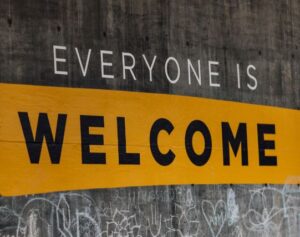
The same is true today as ever: people move to make a better life for their families. Immigrant Americans move here for the promise of freedoms that all of us cherish, native or newcomer. Immigrants are our neighbors, friends, and family – they make up our communities, help bolster our economy, and contribute to our shared culture. Immigrants, like all of us, often need help finding safe, stable, and healthy housing, among other public services. Everyone, no matter where they come from or how long they’ve lived here, deserves a safe and affordable place to call home. The United States must be a beacon for all people who seek a better life for themselves and their families.
Immigrant Access to Housing and Emergency Assistance
Mixed-Status Rule
For federal housing programs subject to Section 214 of the Housing and Community Development Act, Congress has authorized that “mixed-status” families, those which include members who are eligible and others who are ineligible for housing assistance based on their immigration status, to be permitted to live together in subsidized housing with prorated assistance.
For more information, see NHLP and the National Low-Income Housing Coalition’s Keeping Families Together campaign.
Resources:
Public Charge Rule
Some people who apply for a green card (Lawful Permanent Resident status) or a visa to enter the U.S. must pass a “public charge inadmissibility test”, which assesses whether they are likely to depend on the government as their main source of support in the future. Immigration officials look at a person’s whole situation, including their age, income, health, education or skills, and family situation. This includes whether a family member or another person with enough income or resources has promised to support someone.
On July 16, 2026, the U.S. Department of Homeland Security (DHS) issued a final rule on the “public charge inadmissibility test,” effective September 18, 2026. The 2026 final rule rescinds the 2022 public charge rule.
The 2022 public charge rule had limited the benefits considered to:
- (1) cash assistance programs that provided on-going payments, like Supplemental Security Income, Temporary Assistance for Needy Families, and general assistance; and
- (2) long-term institutional care at government expense, such as nursing homes.
Housing benefits did not factor into a public charge determination under the 2022 public charge rule.
The 2026 final rule removes these limits and gives DHS officer full discretion to consider a wide array of means-tested public benefits in making a public charge determination. DHS has stated that it “is considering all government provided, paid or subsidized housing assistance so long as it is means-tested.” The 2026 final rule’s scope is far broader and more encompassing than previous public charge rules.
The 2026 public charge final rule will result in a significant chilling effect on immigrant families and communities and their access to housing assistance, as well as other critical public benefit programs. Read our memo about the 2026 public charge final rule here (updated September 2026) – or see below.
For more up-to-date information on public charge and immigrant access to public benefits, check out the Protecting Immigrant Families coalition.
See below for NHLP’s recent actions around public charge.
- NHLP Urges DHS to Withdraw Harmful Public Charge Proposal and Protect Immigrants (press release, comment).
- Previously, NHLP worked with national partners to mount a successful legal challenge to the first Trump administration’s public charge rule. (2021 press release, 2023 press release).
Language Access
Additional Resources
- NHLP has prepared this memorandum which provides additional legal guidance for advocates seeking remote hearings as a means of trying to protect their clients against possible ICE encounters. (August 2025)
- The National Tenants Bill of Rights
- Saving Affordable Homes
- Housing Voucher Utilization
- Protections for Survivors of Gender-Based Violence
- Nuisance and Crime-Free Ordinances Initiative
- Immigrant Rights
- Fair Housing & Housing for People with Disabilities
- Housing Opportunities for People Reentering
- Healthy Housing
- Tenants and Foreclosure
- Utility Allowances, Energy-Efficiency, and Renewables in Affordable Housing